Explore the intersection of AI and ESG, focusing on how robust governance frameworks are essential for developing and deploying AI sustainably and ethically. Learn about the key principles and practices for responsible AI.
In the rapidly evolving landscape of artificial intelligence, the conversation is shifting beyond just innovation and efficiency to encompass broader societal and environmental impacts. This is where Environmental, Social, and Governance (ESG) principles intersect with AI. While ESG is traditionally associated with corporate responsibility and investment, its application to AI is becoming increasingly critical, particularly concerning the “G” for Governance.
The Rise of AI and the Need for ESG Integration
Artificial intelligence is no longer a futuristic concept; it’s deeply embedded in our daily lives, influencing everything from personalized recommendations to critical decision-making in healthcare and finance. As AI’s power grows, so does its potential to create both immense good and unintended harm. This dual nature necessitates a proactive approach to ensure AI development and deployment are sustainable, equitable, and ethical.
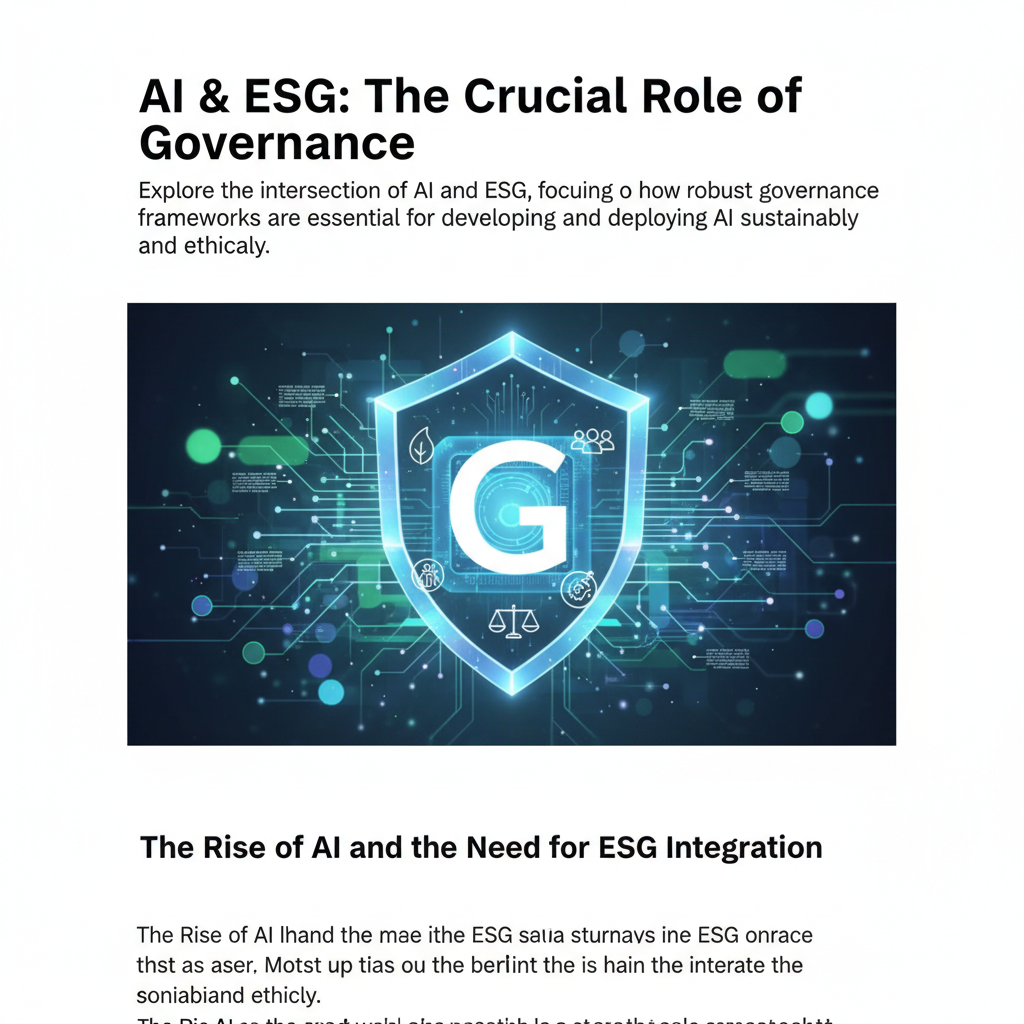
The “E” (Environmental) in ESG for AI can relate to the energy consumption of large AI models, the carbon footprint of data centers, and the resource intensity of hardware. The “S” (Social) encompasses issues like algorithmic bias, job displacement, data privacy, and the impact of AI on human rights and well-being. But it’s the “G” (Governance) that often acts as the overarching framework, dictating how an organization addresses both its environmental and social responsibilities in the context of AI.
Why Governance is Paramount for Ethical AI
Governance, in the context of AI, refers to the systems, processes, and policies that guide the design, development, deployment, and monitoring of AI systems. It’s about establishing clear accountability, transparency, and oversight to ensure AI aligns with organizational values, legal requirements, and societal expectations. Without strong governance, the risks associated with AI can quickly spiral.
Here’s why robust AI governance is indispensable:
- Mitigating Bias and Ensuring Fairness: One of the most significant ethical challenges in AI is algorithmic bias, which can lead to discriminatory outcomes. Governance frameworks mandate processes for identifying, assessing, and mitigating bias throughout the AI lifecycle, from data collection to model deployment.
- Ensuring Transparency and Explainability: “Black box” AI models, whose decision-making processes are opaque, pose significant challenges to trust and accountability. Good governance promotes the development of explainable AI (XAI) and demands transparency in how AI systems operate, helping stakeholders understand and challenge AI decisions.
- Protecting Data Privacy and Security: AI systems are data-hungry, making robust data governance crucial. This includes adhering to data protection regulations (like GDPR), implementing strong cybersecurity measures, and ensuring ethical data sourcing and usage.
- Defining Accountability: When an AI system makes a mistake or causes harm, who is responsible? Governance frameworks establish clear lines of accountability, ensuring that individuals and organizations are answerable for the AI systems they create and deploy.
- Promoting Human Oversight and Control: While AI can automate many tasks, human oversight remains vital, especially in critical applications. Governance ensures that humans are in the loop, capable of intervening, correcting, and overriding AI decisions when necessary.
- Addressing Environmental Impact: As AI models become more complex, their computational demands (and thus energy consumption) increase. Governance can mandate eco-friendly practices in AI development, such as optimizing algorithms for efficiency and sourcing renewable energy for data centers.
Key Elements of Effective AI Governance
Implementing effective AI governance requires a multi-faceted approach:
- Establish Clear Policies and Principles: Develop explicit ethical guidelines and principles for AI development and use, reflecting the organization’s values and commitment to responsible AI.
- Form Cross-Functional Teams: Bring together experts from ethics, law, technology, and business to provide diverse perspectives and ensure comprehensive oversight.
- Implement Risk Assessment and Management: Continuously identify, assess, and mitigate potential risks associated with AI systems, including ethical, social, and operational risks.
- Conduct Regular Audits and Reviews: Periodically audit AI systems for compliance with policies, performance, and ethical considerations.
- Invest in Training and Education: Educate employees and stakeholders on responsible AI practices, ethical considerations, and the organization’s AI governance framework.
- Foster a Culture of Responsibility: Embed ethical AI considerations into the organizational culture, encouraging open discussion and proactive problem-solving.
- Engage with Stakeholders: Collaborate with external stakeholders, including regulators, academics, and civil society, to stay abreast of evolving best practices and societal expectations.