
Beyond Profit – The New Era of Business Value
For decades, the primary metric of business success was often singularly focused on profit. While financial performance remains vital, a profound shift is underway. Today, investors, customers, and employees are increasingly demanding that companies demonstrate not just what they earn, but how they earn it, and the broader impact they have on the world.
This is where ESG – Environmental, Social, and Governance – comes into play. It’s more than just a buzzword; it’s a fundamental framework for evaluating a company’s sustainability and ethical impact, and it’s rapidly becoming a non-negotiable aspect of modern business strategy.
What Exactly is ESG? A Quick Breakdown
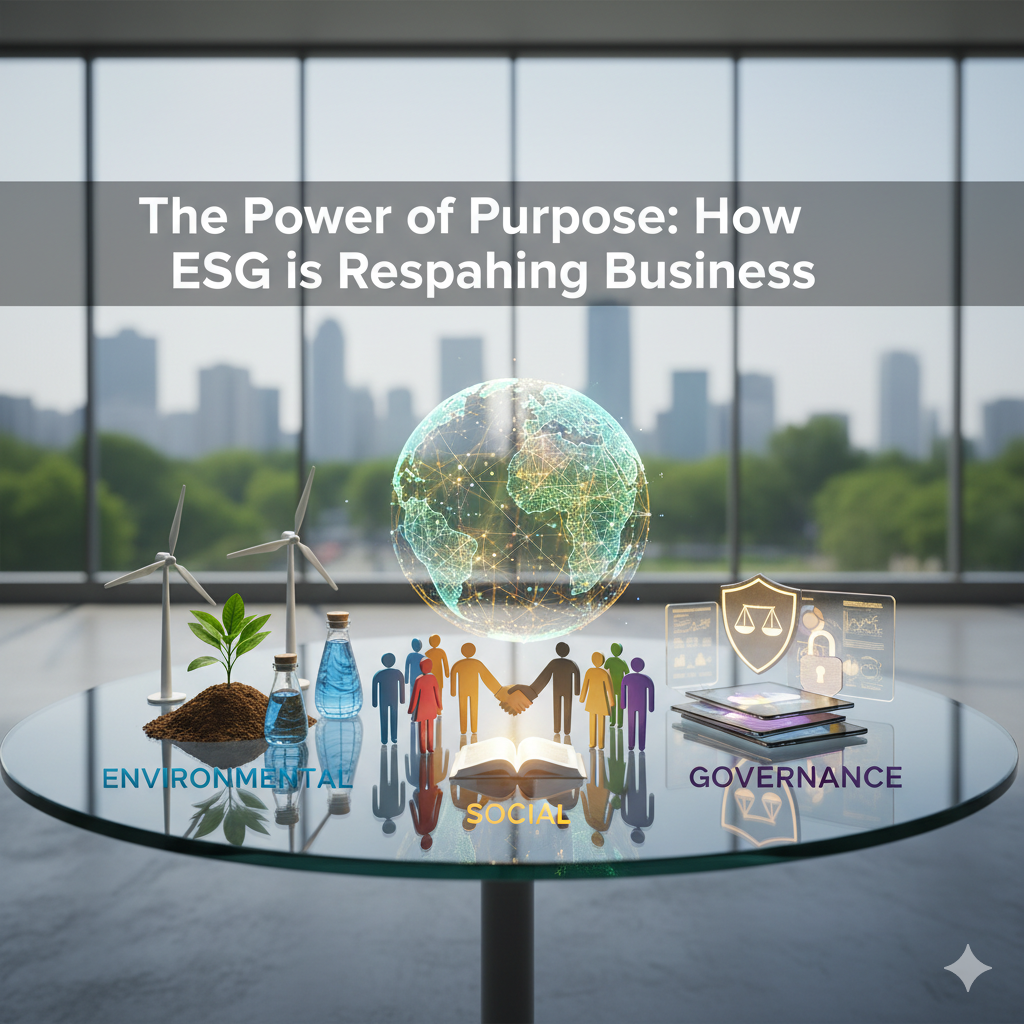
ESG stands for three core pillars that measure a company’s commitment to responsible and sustainable practices:
1. Environmental (E): Our Planet, Our Responsibility
This pillar assesses a company’s impact on the natural world. It includes:
- Climate Change & Carbon Emissions: Efforts to reduce greenhouse gas emissions, energy efficiency, and renewable energy adoption.
- Resource Depletion: Sustainable use of water, raw materials, and waste management.
- Pollution & Biodiversity: Preventing pollution, protecting ecosystems, and reducing ecological footprint.
- Sustainable Sourcing: Responsible supply chain practices, from raw materials to final product.
2. Social (S): People, Community, and Culture
The social pillar focuses on how a company manages its relationships with its employees, suppliers, customers, and the communities where it operates.
- Employee Relations: Fair labor practices, diversity, equity & inclusion (DEI), health & safety, employee development.
- Customer Satisfaction: Product safety, data privacy, ethical marketing.
- Community Engagement: Philanthropy, local economic development, human rights in the supply chain.
- Supply Chain Standards: Ensuring fair wages and safe conditions throughout the entire value chain.
3. Governance (G): Leadership, Ethics, and Transparency
Governance refers to the internal system of practices, controls, and procedures a company uses to govern itself, make decisions, comply with laws, and meet the needs of external stakeholders.
- Board Diversity & Structure: Independent directors, diverse representation.
- Executive Compensation: Fair and transparent pay practices.
- Shareholder Rights: Protecting the interests of all shareholders.
- Business Ethics: Anti-bribery and corruption policies, transparent lobbying, data security.
- Risk Management: How the company identifies and mitigates operational and financial risks, including ESG-related risks.
Why ESG Matters Now More Than Ever: Benefits for Your Business
Embracing ESG isn’t just about doing good; it’s smart business. Companies with strong ESG performance often experience a range of tangible benefits:
- Attracting Investment & Capital: Investors are increasingly using ESG criteria to screen potential investments. Funds with strong ESG mandates are growing rapidly, making ESG performance a key to accessing capital and potentially lowering the cost of borrowing.
- Enhanced Brand Reputation & Customer Loyalty: Consumers, especially younger generations, are more likely to support brands that align with their values. A strong ESG profile builds trust and fosters deeper loyalty.
- Improved Operational Efficiency & Cost Savings: Focusing on environmental factors often leads to reduced waste, energy efficiency, and lower resource consumption, directly impacting the bottom line.
- Attracting & Retaining Top Talent: Employees, particularly millennials and Gen Z, seek purpose-driven work. Companies with strong ESG commitments are more attractive employers, leading to higher engagement and lower turnover.
- Reduced Regulatory & Legal Risks: Proactive ESG measures can help companies anticipate and navigate evolving environmental regulations, social mandates, and governance standards, reducing the risk of fines, litigation, and reputational damage.
- Innovation & New Market Opportunities: A focus on sustainability can spark innovation, leading to new products, services, and business models that cater to environmentally and socially conscious markets.
- Resilience & Long-Term Value Creation: Companies integrating ESG principles are often more resilient to market shocks and better positioned for long-term sustainable growth.
ESG in Action: What Does it Look Like?
Imagine a clothing brand that uses recycled materials, ensures fair wages for garment workers globally, and has an independent, diverse board overseeing ethical operations. Or a tech company that powers its data centers with renewable energy, invests in STEM education for underserved communities, and maintains robust data privacy protocols. These are examples of ESG in practice.
Getting Started: Your Journey to a More Sustainable Business
For businesses looking to embark on their ESG journey, here are some initial steps:
- Assess Your Current Impact: Understand where you stand across environmental, social, and governance aspects. Conduct an internal audit.
- Identify Material Issues: Determine which ESG issues are most relevant (material) to your industry and business operations.
- Set Clear Goals: Establish measurable, time-bound objectives for improving your ESG performance (e.g., reduce carbon emissions by X% by 2030, increase diversity in leadership by Y%).
- Integrate ESG into Strategy: Embed ESG considerations into your core business strategy, not just as an add-on.
- Communicate & Report: Transparently share your progress and challenges with stakeholders through sustainability reports, your website, and other channels.
- Seek Expertise: Consider consulting with ESG experts or using specialized software to help manage and track your initiatives.
Conclusion: Building a Future Where Business and Society Thrive Together
ESG is not just a trend; it’s a fundamental shift towards a more holistic understanding of business success. By integrating Environmental, Social, and Governance principles, companies can unlock new opportunities, mitigate risks, and build a more resilient, reputable, and profitable future – one where purpose and profit go hand-in-hand.
What steps is your business taking to embrace ESG? Share your thoughts in the comments below!