
In our pursuit of a sustainable future, one often-overlooked yet profoundly impactful concept is the “waste hierarchy.” It’s more than just a guideline; it’s a strategic framework, a silent ladder guiding us toward a more circular economy and a healthier planet. For businesses aiming not just to survive but to thrive in the 21st century, understanding and implementing the waste hierarchy isn’t just good practice – it’s an economic imperative and a cornerstone of robust ESG (Environmental, Social, and Governance) performance.
The waste hierarchy, typically depicted as a pyramid or an inverted triangle, prioritizes waste management strategies based on their environmental impact. At its apex are the most desirable and impactful actions, while the base represents the least preferred, albeit sometimes necessary, options. Let’s descend this ladder, understanding each rung and its significance.
Rung 1: Prevention – The Ultimate Goal
At the very top, the golden standard of waste management is prevention. This means avoiding the creation of waste in the first place. It’s about designing products, processes, and systems that inherently minimize waste generation. Think about it: a kilogram of waste not produced is a kilogram that doesn’t need to be collected, transported, processed, or disposed of.
For businesses, prevention translates into:
- Eco-design: Creating products with longer lifespans, fewer components, and easily recyclable materials.
- Process Optimization: Streamlining manufacturing to reduce scrap and material offcuts. For instance, a food processing plant could optimize cutting patterns to minimize trim waste, potentially reducing material loss by 5-10%.
- Digitalization: Reducing reliance on paper through digital documents and cloud storage. A typical office can reduce paper waste by up to 30% by transitioning to digital-first operations.
- Supplier Engagement: Working with suppliers to reduce packaging and ensure sustainable sourcing.
The financial benefits of prevention are substantial. Reduced material purchasing, lower waste disposal costs, and enhanced brand reputation all contribute to a stronger bottom line.
Rung 2: Reuse – Giving Life a Second Chance
Once prevention efforts are exhausted, the next best step is reuse. This involves using products or materials multiple times for their original purpose or a different one, without significant reprocessing. Reuse extends the lifespan of an item, delaying its entry into the waste stream and conserving the energy and resources that would be needed to produce a new item.
Examples in the business world include:
- Reusable Packaging: Shifting from single-use to returnable containers, pallets, and crates. Companies implementing reusable transit packaging have reported reductions in packaging waste by as much as 80%.
- Second-hand Markets: Facilitating the resale or donation of used equipment, furniture, or electronics.
- Repair and Refurbishment: Offering services to extend the life of products rather than encouraging immediate replacement. The electronics repair industry, for example, is growing as consumers and businesses seek to extend the life of their devices.
Reuse not only saves resources but also fosters a sense of community and provides new business models around repair and refurbishment.
Rung 3: Recycling – Transforming the Old into the New
When prevention and reuse aren’t feasible, recycling becomes the next crucial step. This process involves converting waste materials into new materials and objects. Recycling diverts waste from landfills, reduces the consumption of virgin resources, and often requires less energy than producing new items from raw materials.
Key aspects for businesses:
- Material Segregation: Implementing robust internal systems for separating different waste streams (paper, plastic, glass, metal) to ensure high-quality recyclates. Contamination can significantly reduce the value and recyclability of materials.
- Partnering with Recyclers: Establishing relationships with reputable recycling facilities that can effectively process segregated waste.
- Closed-Loop Systems: Where possible, creating systems where a company’s waste materials are recycled back into its own production processes. For example, a beverage company might use recycled PET plastic to make new bottles.
- Extended Producer Responsibility (EPR): Understanding and fulfilling obligations under EPR schemes where producers are responsible for the end-of-life management of their products.
While recycling is vital, it’s important to remember that it still consumes energy and resources for collection, sorting, and reprocessing. Hence, its position below prevention and reuse.
Rung 4: Recovery – Extracting Value
Further down the hierarchy is recovery, primarily referring to energy recovery. This involves converting non-recyclable waste materials into usable energy, such as electricity, heat, or fuel, through processes like incineration with energy recovery (Waste-to-Energy).
While better than landfilling, energy recovery is still less desirable than the top three rungs because it often relies on the combustion of materials that could have been prevented, reused, or recycled. However, for residual waste that cannot be managed otherwise, it offers a way to extract some value and avoid methane emissions from landfills.
For businesses, this might involve:
- Waste-to-Energy Facilities: Sending process waste that cannot be recycled to facilities that convert it into energy.
- Anaerobic Digestion: For organic waste, this process produces biogas (for energy) and digestate (for fertilizer).
Rung 5: Disposal – The Last Resort
At the very bottom of the ladder lies disposal, primarily landfilling. This is the least preferred option due to its significant environmental impacts, including land use, potential for soil and water contamination, and the generation of greenhouse gases (especially methane from organic waste).
While modern landfills are engineered to mitigate some of these impacts, they represent a permanent loss of resources and a burden on future generations. The goal of the waste hierarchy is to minimize the amount of waste that reaches this rung.
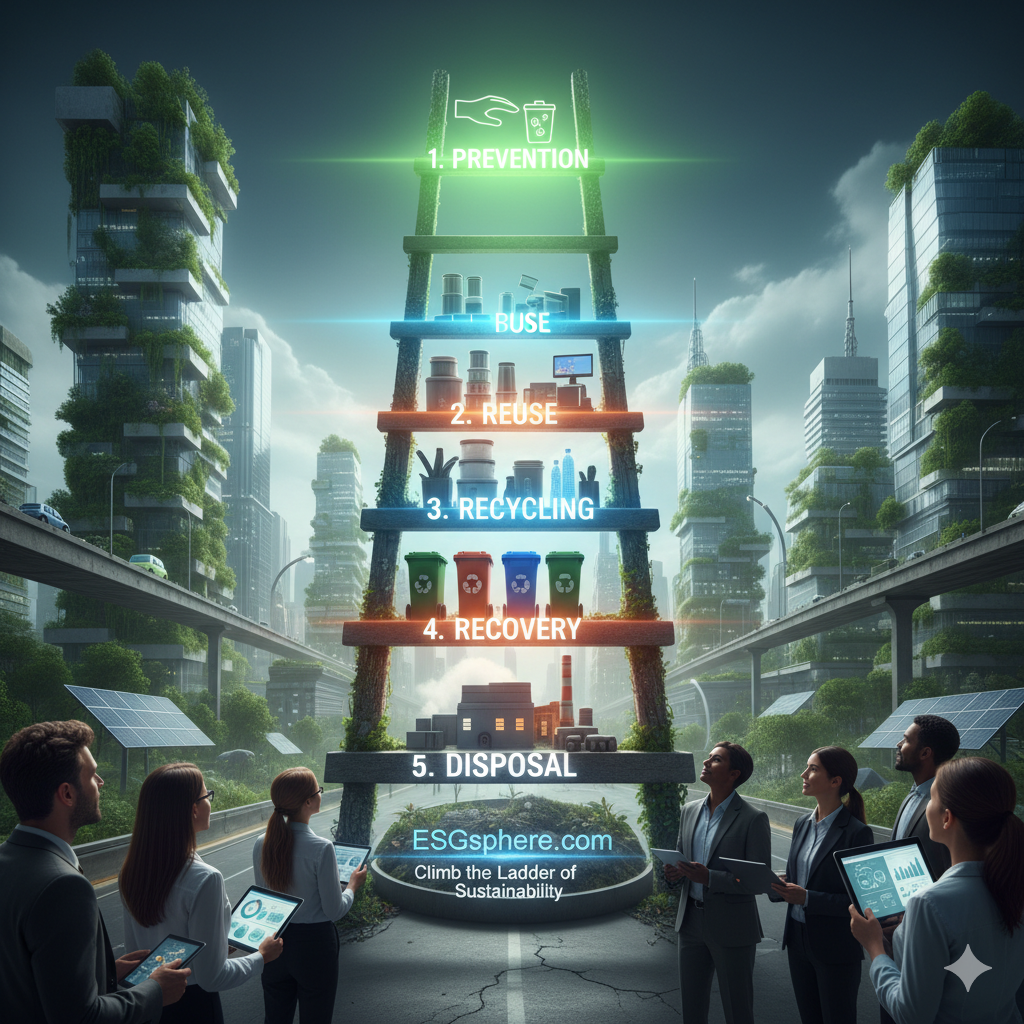
Climbing the Ladder: Why it Matters for Your Business
Embracing the waste hierarchy isn’t just about environmental responsibility; it’s a strategic move that delivers tangible benefits:
- Cost Savings: Reduced material purchases, lower waste disposal fees, and potential revenue from recycled materials directly impact your bottom line.
- Enhanced Brand Reputation: Consumers and stakeholders increasingly favor businesses committed to sustainability. Strong waste management practices demonstrate genuine environmental stewardship.
- Regulatory Compliance & Risk Mitigation: Proactive waste management helps companies comply with environmental regulations and mitigate risks associated with fines, liabilities, and resource scarcity.
- Innovation & Competitive Advantage: Thinking circularly can spur innovation in product design, process efficiency, and new business models.
- Improved ESG Performance: Adherence to the waste hierarchy is a clear indicator of strong environmental governance, contributing positively to your overall ESG rating, which is crucial for investors and stakeholders. A high ESG rating can lead to lower cost of capital and increased investor confidence.
Consider this: The global waste management market is projected to grow significantly, reaching over $400 billion by 2027. Businesses that proactively manage their waste are better positioned to capitalize on this trend and demonstrate leadership.
Take the Next Step with ESGsphere.com
Navigating the complexities of sustainability, ESG reporting, and effective waste management can be challenging. This is where comprehensive solutions become invaluable.
If your company is ready to climb the unseen ladder of sustainability, optimize its waste management strategies, and demonstrate robust ESG performance, consider exploring the resources and solutions offered by ESGsphere.com.
ESGsphere.com provides a holistic platform designed to empower businesses in their sustainability journey. From streamlining ESG data collection and reporting to offering expert guidance on circular economy principles and waste hierarchy implementation, they equip you with the tools and insights needed to transform challenges into opportunities.
Don’t just manage waste; master it. By adopting the waste hierarchy, your business can reduce its environmental footprint, enhance its financial performance, and build a more resilient and sustainable future.
Join the leading companies who are not just talking about sustainability, but actively building it, one rung at a time. Visit ESGsphere.com today to learn how they can support your sustainability and ESG goals.